Shivendra Singh Dungarpur : "You make the world see India from another angle"
Shivendra Singh Dungarpur (Founder Director at the Film Heritage Foundation, Festival Director at the MAMI Mumbai Film Festival, Filmmaker, Archivist).
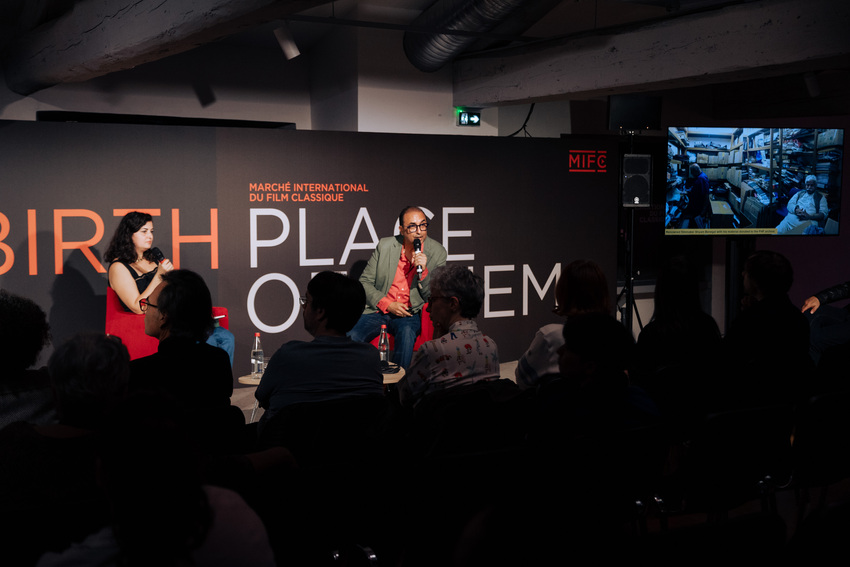
What does it represent for you to be here at this market this year?
Shivendra Singh Dungarpur: Lyon is the birthplace of cinema, and it is the most important market for classic and heritage cinema. I have never been here, but I have always wanted to come. Being here has been so beautiful. The moment I arrived, I fell in love with Lyon and the city itself. I am here for the first time to do interviews today, and to see The Hanger, which is where the first movie was made. It is such an important emotional journey for me, because Pakeezah by Kamal Amrohi is the film I saw as a child and is screened at the festival, and then experiencing the wonderful presentation at the market for the first time, talking to and having fellow people from different regions and different parts involved with heritage cinema. Really, talking about cinema and talking about your journey, which is the birth of your career in a place which is the birth of cinema, it can't be better than that.
Why do you think a market like this one, specialized in heritage cinema, is important?
Shivendra Singh Dungarpur: I think it's very important because heritage is only looked upon from the point of view that it is important to be saved, but how do you make it accessible? How do you showcase it? How do you meet people from different regions and find a collective way to take it further? And the market does that. We are used to markets of contemporary cinema because they bring you money, but doing it for heritage cinema, it's very unique. When I walked into the room, there were so many people from different regions. I think the most important aspect of heritage is that once you preserve and restore it, how do you bring it out? How do you take it out, whether it's Blu-rays, screenings, or whichever format—how do you bring it to the people? The market solves that issue.
In 2014, when you created the Film Heritage Foundation, why did you feel the urge to create that foundation?
Shivendra Singh Dungarpur: I made a film called Celluloid Man, for which I traveled all over India looking for films, and when I realized that so little is left, it was something that I needed to do. There are many people who want to be filmmakers, but there are very few people who want to get into preserving films. Preserving or restoring films requires a lot of money, but also it's very hard. My filmmaking aspect helped me deeply, because I understood the material, I understood what to preserve, what to restore. I think if I hadn't started the foundation in 2014 and done what I've done, we wouldn't have been able to save India's heritage, and given joy to so many people by making it accessible.
Why do you think Indian heritage was left like this for a long time?
Shivendra Singh Dungarpur: I think cinema in India has been looked upon as entertainment, and never looked upon as an art form. Producers didn't care about their heritage, and once it made money, they move on. But even if some still make money, they don’t even look after them, because it cost money to look after that. So there was a general neglect about cinema, and that's what I think really impacted it.
You founded the Film Heritage Foundation, you are a filmmaker yourself, and you are also the director of the Mumbai Film Festival. How do those three jobs connect to and resonate with each other?
Shivendra Singh Dungarpur: I think if you love cinema and if you're crazy about cinema, then you don't feel the differentiation between what you do, because at the center of the three functions is a cinephile. You're a child wanting to watch great cinema, you want to be in awe, and all three need that. So I've never left that child in me, and it just connects whether you're showing a heritage film, you're showing a contemporary film, or you're being on a set making a film. All three have the same challenges, and I look at it through the lens of cinema.
And do they feed each other?
Shivendra Singh Dungarpur: Yes, I understood that, and because I'm able to bring heritage films and go to all the festivals, it helps me in the Mumbai Film Festival, which is already a platform which is established. So I think each one helps the other, but most importantly, it's the understanding and the knowledge of what's happening around you, that's very important.
With the foundation, how do you ensure that you can have this diversity with the restoration and preservation, and be able to reach every part of India?
Shivendra Singh Dungarpur: One of the main aspects relies on two elements we have implemented: we started restoring films from different regions, and we organize training workshops in various parts of the country. This is truly very important, because when you restore a film from the Northeast or other regions, you make the world see India from another angle. Making people not just think of Bollywood, but become aware of the diversity of this country and its regions. It is crucial to restore films coming from different regions of the world. These workshops also help us go there, work in these regions, understand them, preserve their culture, and all of this fits into the global vision of Indian heritage.
What is, according to you right now, the biggest challenge that the whole heritage cinema has to face—not specifically in India, but in general?
Shivendra Singh Dungarpur: No, I think there are several challenges. Financial is one of them, because in many parts of the world, culture budgets are getting reduced. And while contemporary films will still find a market because there is a big market, the old classics or the heritage films always will find a challenge, because they will always say "not important" and not that. Second is the political scenario, the change in the political times and the wartimes we are living in. Look at what's happening in Syria, Ukraine, look at all the films lying all over—we have still not been able to do anything in Africa, their heritage. So the whole world heritage is, in many parts of the world, still struggling to find its feet. I work in Sri Lanka, Nepal, and all that kind of stuff. So it's a huge challenge right now because of political, social, and economic, you know.
The International Classic Film Market is made possible by
 |
 |
 |
 |
|
In partnership with |
With the support of |





Media Partners